A bit of background
I am not used to having time on my hands. I’m a 61 yr old doctor, more specifically a urological surgeon working in West London. Although familiar with surgery I am acutely aware that often we do not explain well the things that matter most to our patients. Often that is because we do not know or think enough about the little things that worry patients most or because we are pleased that we have done ‘good operation’ and the recovery will look after itself. Now that I am on the other side of the fence it’s clear that there are uncertainties about ones recovery, how soon can I start to weight-bear? how much is too much exercise? why have my calf muscles disappeared in just a few weeks? what should I tell them at work about coming back?
Of course I have had excellent advice and support from my orthopaedic surgeon and hopefully my experience may help other patients going through this type of surgery, and I need another outlet other than reading, and watching Netflix.
This story started back in May 2017 when I developed a tendonitis of tibialis posterior in my left ankle. Tibialis posterior is a muscle that comes from the back of the main lower leg bone (tibia) and the tendon then passes under the bony lump on the inside of your ankle and fixes to one of the small bones on the undersurface of your foot helping it to flex your foot (push it down), but importantly maintaining the natural arch of the foot and the correct alignment of its many small bones.
What brought this on? It started after I had been jogging, though there was nothing special about that jog compared to many others I had done over the last year or so. My standard circuit, about 7K, not fast but during the next week the pain on the inside of my lower leg just got worse and worse. There was some swelling and I was taking regular ibuprofen. I do quite a lot of walking during my job and I was finding that a struggle. After a couple of weeks I had an x-ray to exclude a stress fracture, that was clear and then I was fitted with orthotic insoles to support the arch. I just hoped that if I rested as much as possible that it would improve, but it didn’t. I found the insoles uncomfortable and at the end of July I had an ultrasound scan that showed a florid active tendonitis and I was given a steroid injection. Although that may have helped a little it remained too painful to jog any more and I couldn’t stand on tiptoe on my left foot.
That was a big problem as my dear wife and I have a ballroom dancing lesson every week, which is our shared activity, as I don’t play bridge and she doesn’t like golf. I was becoming increasingly useless as all the dances requiring some rise and fall became flat left foot such that it was becoming a bit of a joke amongst the other half dozen couples in our dance group. Never mind there is always the Tango!
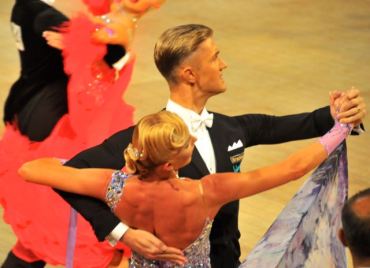
Indeed it was during such a lesson in August, trying a foxtrot at the time that I felt the tendon ‘pop’. A sharp pain such that I needed to sit down but then over the next week or so it actually become more comfortable as the tendon wasn’t stretched any more. Other problems started now however, subtle changes at first with my left foot tending to point outwards and new pain on the top of my forefoot where I hadn’t had any before.
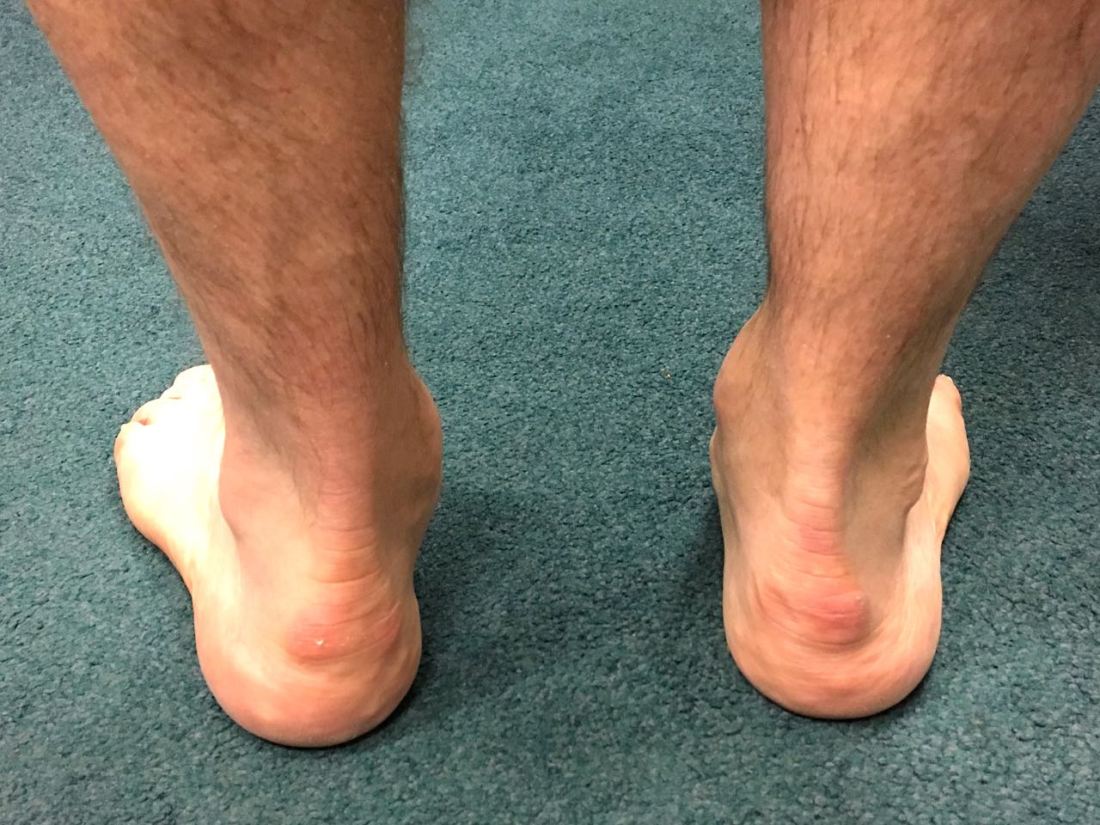
Despite strengthening exercises, I started to limp more obviously because of the discomfort so in early October I was seen by Mr Ahmad Malik, an orthopaedic consultant specialising in foot and ankle problems. X-rays showed malalignment of my foot bones. He drew angles and lines on the films which were all pointing the wrong way. My arch had collapsed and the MRI confirmed that the tendon had ruptured but luckily there were no more than very minor arthritic changes. I now officially had an acquired flat foot deformity stage 2-3.
This photo shows the Too Many Toes sign. Looking at your feet from behind, only the little toe should be visible. On my affected left foot about 3 toes are visible as my foot has started to twist outward as the arch has collapsed.
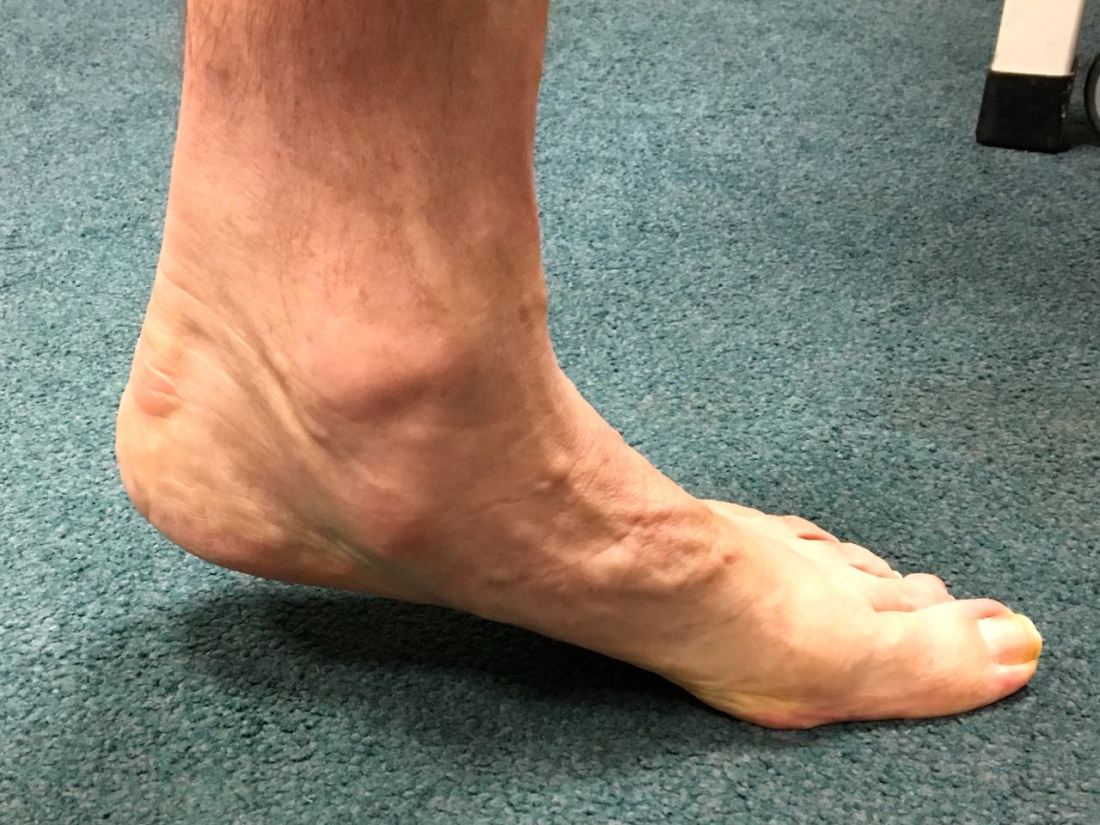
Here is my attempt to stand on tiptoe on my affected foot – hopeless! Note the bulging on the inside of my ankle which represents swelling and fluid around the ruptured tendon.
This blog will document my progress, my thoughts and concerns and I hope others going along a similar path to me will find it of interest. Do let me know what you think and please don’t be offended if I take a while to reply.
 My Flatfoot Surgery Recovery
Many thanks for recording all this in your blog – it has proved to be very useful to us in considering surgery or not. My 67 year-old wife has just been diagnosed with Adult Acquired Flat Foot Deformity by Mr Malik, & he has suggested corrective surgery such as you have had. The main difference though is that my wife has not had the tendon rupture that prompted your consultation & subsequent surgery, & from what we have read so far, there is every chance that specific exercise & physio could well maintain her condition in an acceptably controlled manner & save the trauma of the corrective surgery. So, our question is please – if the AAFFD had come on gradually, & you had NOT had the ruptured tendon to trigger the need for surgical intervention, do you think you would still have gone ahead with the surgery, with all you now know about the long & difficult recovery period? Thanks in advance for any advice you feel you can offer.
LikeLike
Thank you for your question. It was the rupture of my PT that made surgery inevitable. My understanding is that if you just have the AAFFD without undue pain then physio and orthotics could well keep the situation stable. I did try this for several months before my PT ruptured but I confess it didn’t really help though I guess that your wife doesn’t have an acute tendinitis. I found Mr Malik very open to discussion of the pros and cons of a particular approach and he has been very clear about the potential shortcomings of surgery. Although I am by no means back to normal yet at 5 months, I am functioning much better and am sure that surgery was the correct choice for me.
LikeLike
Many thanks for that – it rather bears out our decision not to go down the surgical route yet, as my wife does not have any other serious underlying complication at present. As well as your useful blog, Mr Malik put us in touch with another lady who has recently had the corrective surgery, but like you, she started from a worse postion than my wife is in at the moment. We’ve also talked to our GP about it, who agrees with our course of action, & has given us referrals to a podiatrist & physio to see if we can improve things via that route – fingers crossed! Thanks again for the blog, & good luck with your continuing recovery.
LikeLike
I had extensive flat foot surgery 10 weeks ago. I started walking slowly at about 5 weeks. Now that the numbness is wearing off, I am finding my arch hurts as bad as it did before surgery. Did you have arch pain while you were recovering?
LikeLike
I do continue to get discomfort in the arch, in the region of the navicula on the inner side, mainly felt on the top. This is the particularly the case after exercise. My two persisting problems are that I cannot do a decent single heel raise, and my balance on my left foot alone is still poor. I was going to do a 2 yr update at Christmas but too many other things were on so I will endeavour to do a proper update soon. So you at less than 6 months are very early on in your recovery to judge the final result.
LikeLike
Thank you so much for your reply. I am at 5.5 months at this point. I can walk about .5 mile at a time with mild discomfort. I have had to do a mile at a time but was pretty sore after. I can stand for about 30 mins at a time if I am somewhat active like cooking. Standing still for more than 10 mins is tough. The pain in general seems to shift around all over the foot depending upon the day. I just don’t want to re-injure my tendons. Doc keeps saying we all heal differently but I am desperate for more specifics and prognosis. I will try to be more patient. Your blog was EXTREMELY helpful to me in the first 4 months and I thank you for taking the time to create it. Barbara
LikeLiked by 1 person
My story is a lot like yours. I am a 67 yo retired physician(Nephrogist). I was a runner until my PPT ruptured 3 years ago leading to acquired flat foot. I decided to do surgery at the beginning of this year but delayed due to the COVID-19 pandemic. So on June 9th I had surgery. I know it will be a long haul toward rehabilitation.
Several simple questions are this. In your video in a walking boot what were you wearing on your non operative shoe to raise it?
The post operative pain after the nerve block wore off was quite impressive. For how long did it last at significant intensity and what provided the best relief in addition to the opiates?
What physical therapy was most helpful?
Lastly have you returned to running? If so at what distance and how has your pace been affected?
Lastly your blog is very helpful as there is almost no helpful post operative information to be found.
LikeLiked by 1 person
Dear Paul – Sorry for the long delay in replying but I was just about to have surgery for a rather different condition then, and now recovering again!
To raise your normal shoe to match the boot you need an ‘even-up’ device. I show the one I used at the beginning of the partial weight bearing on 2 crutches video in my ‘2 month’ post. This worked very well for me.
The pain in my foot was mainly when I was standing up and settled when lying down. It seemed to improve in time with the resolution of my ‘purple foot sign’ I didn’t use any analgesics stronger than ibuprofen & paracetamol after the first couple off weeks so I hope you are feeling more comfortable now.
Physio in the pool was the best thing for me over the first few months. I started this at 5 weeks, but if you have a cast rather than a removable boot then that obviously has to be off first. I then moved to gym work but kept with the pool work alongside for several months
I was meaning to do some long term posts as it over over 2 years now. Will now make an effort.
The most difficult recovery was in balance and that still isn’t right. Any exercise involving standing on one leg is tricky, shut my eyes and it was all over the place for at least a year and still not as good as my other side.
At one year still struggled to do a single heel raise and still cannot get up as high on the affected foot, though some of this in my case may be the effect of my achilles lengthening. Only a problem in the Foxtrot!
I continue with Jon, my personal trainer and did get back to jogging after about 9 months. I continue to get some foot pain, more in the area of the navicular/medial cuneiform area, but my stamina is more limited by some lung issues at the moment. than my foot.
LikeLike
This blog and your comments (as well as others) are so helpful! As Paul mentioned, there is a lot of Pre-Op info but very little post-op. Plus, I love getting the insight from those in the medical field. I am 11 months post surgery this month. I can honestly say that this is the first month I have had days where my foot doesn’t really hurt much at all. However, it can still get quite sore/swollen some days based on activity level and standing for long periods. I still find soaking it in ice/hot water alternately for about 20″ on those particular occasions helps that. I probably only feel the need to do this about twice per month at this point.
I have been increasing my activity level each month but try not to overdue it for fear of a relapse. “Slow and steady wins the race.” At this point, I walk between 1.5 – 2 miles each day, bike a few miles most days and swim at least 30 mins each day. I also end my daily walk with flights of stairs. Just this week I have been able to do 4 flights of stairs without using the railings. This might not seem like a bit achievement but it was huge for me. Stairs have been really difficult and I felt like I was ascending and descending with my arms doing much of the work for months.
I agree that balance is still an obstacle. However, another achievement at month 11 is I was able to go to the beach last and walk in the sand and in and out of the water with big waves and significantly uneven shoreline. Up until now, I could barely walk into the water and back to my chair without feeling like I was falling over.
I have just re-read what I wrote. It all sounds very positive and I must say, seven months ago, I could not imagine me writing this post! Best of luck to anyone reading his blog! Be patient with yourselves!
Thanks again, Mr. Limpy
LikeLiked by 2 people
Hi there!! I wanted to get some advice before I got to the doctor. I’m not sure if it is too much to seek surgery, but I am 24 year old female. I ran cross country and track in high school and university. Since then I have had orthotics, supportive shoes, etc. I have had 2 stress fractures (one in the tibia, one in the fibula) recently (last year) I tore my plantar fascia in my flat foot. I’ve had 3 cortisone shots and finally I had stem cells from my fat injected mixed with my blood plasma. It’s been about 6 months since then (with an additional blood plasma injection) and my foot just seems still painful. I am thinking long term about my health because my hip on the side of my flat foot seems to be weaker and have a daily tightness/pain.
ALL of this to say, would it be worth considering the surgery route, and can you resume high intensity training eventually?
LikeLiked by 1 person
Dear Madison – I would just be wary of surgery as you are so much younger than me and haven’t ruptured your tendon which is what pushed me to the surgical route. All I would say is that you should be able to get back to full training, but you need good advice from your specialist.
LikeLiked by 2 people